
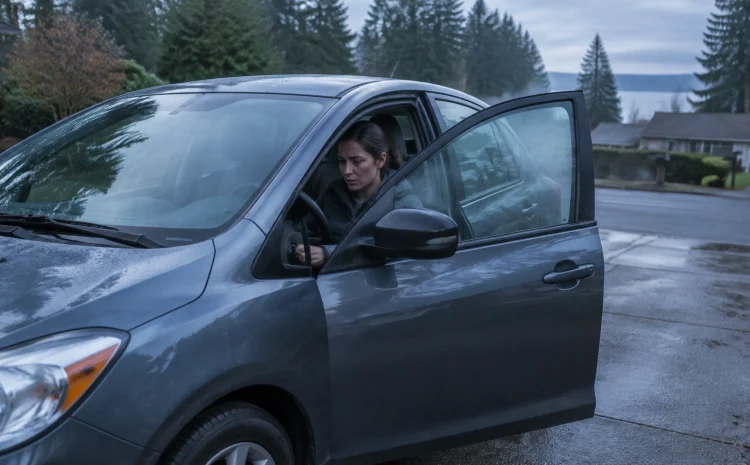
Turn the Key and… Nothing: A Driver’s Guide to No-Start Mornings
You’re already late. You get into your car, turn the key, or press the start button, and hear a click, a slow, tired crank, or nothing at all. On a cold morning, it’s easy to assume the battery is dead. That’s possible, but a no-start can have several causes.
A quick check can help you describe what’s happening and decide what to do next. It won’t replace a proper diagnosis, but it can keep you from repeatedly trying to start the car or arranging a tow before you know whether one is necessary.
Take 60 seconds to check what happens
Before trying again, make sure you’re safely parked, set the parking brake, and turn off accessories such as the headlights, heater fan, and radio. Then notice these five things:
- Does the engine crank? Cranking is the repeated “rr-rr-rr” sound as the engine turns over.
- Are the dashboard lights bright or dim? Check whether they come on normally or fade when you try to start the car.
- Is the car in Park, or is the clutch fully pressed?
- Is a security or key-fob warning light on or flashing?
- If it’s safe and your vehicle allows it, what happens after a jump start?
That last check isn’t for every situation. Read your owner’s manual first, use only the recommended jump-start points and procedure, and don’t attempt a jump if the battery is cracked, swollen, leaking, or may be frozen. If anything about the procedure is unclear, leave it to a professional.
Match the symptom to the likely cause
Slow crank and dim lights
If the engine turns over slowly and the dashboard lights dim noticeably, the battery may be weak or discharged. Cold weather can reduce a battery’s ability to deliver power just as a cold engine needs more effort to turn over. A poor connection at a battery terminal or ground cable can also restrict the flow of electricity. So can a fault in the charging system that left the battery undercharged.
This doesn’t automatically mean you need a new battery. A technician can test the battery’s condition, check cable connections, and measure charging-system performance to narrow down the cause.
One loud click, or silence, with lights still bright
A single solid click without the engine turning over can point to a problem with the starter motor or its solenoid. The part that helps engage the starter. A starter relay, ignition switch, or electrical connection may also be involved.
If you hear nothing and the lights remain bright, the starter is still one possibility, but so are issues with the key, security system, or a switch that confirms the car is in Park. Check the gear selector is firmly in Park. If your owner’s manual allows it, you can try starting in Neutral while keeping your foot on the brake. For a manual transmission, press the clutch fully.
Bright lights and normal cranking, but no start
If the engine turns over at a normal speed but never catches, the starter is doing its job. The problem may instead involve fuel, spark, or an engine-management component. The systems that help the engine run.
Avoid long or repeated starting attempts. They can drain the battery and put extra strain on the starter. A technician can use diagnostic tools and appropriate testing to identify what’s preventing the engine from running.
A flashing security light or key warning
A security or immobilizer light can mean the car isn’t recognizing the key or key fob. Try a spare key if you have one, and follow the instructions in your owner’s manual. For a fob with a weak battery, the manual may describe a backup way to start the vehicle.
Don’t try to bypass the immobilizer. If the warning stays on or the car still won’t start, it needs further diagnosis.
If you try a jump start, pay attention to the result
A jump start can offer a useful clue, but it isn’t a repair or a final diagnosis. Always follow the vehicle manufacturer’s instructions: jump-starting procedures and connection points can vary. Don’t attempt it if the battery is damaged, leaking, or possibly frozen, and stop if you’re unsure about the equipment or steps.
Notice what changes:
- The car starts: The battery may be weak or discharged, but a charging-system issue, poor connection, or another electrical problem could also be responsible. Arrange a battery and charging-system test rather than assuming the problem is solved.
- The car still gives one click or stays silent: A starter circuit, cable, relay, or related electrical fault may be involved.
- The engine cranks normally but still won’t run: The cause likely isn’t simply a low battery. Fuel, spark, security, or engine-management checks may be needed.
For more guidance on cold-weather readiness, the National Highway Traffic Safety Administration’s winter driving tips include checking your battery and other key vehicle systems. AAA also outlines common reasons a car may not start.
Know when to stop troubleshooting
If the car hasn’t started after one or two brief, controlled attempts, continuing to crank it probably won’t help, and may drain the battery further. Stop and get assistance if you notice smoke, a burning smell, fuel leaking, or a damaged battery. Don’t put yourself in an unsafe position to inspect the car, particularly in traffic or severe weather.
A jump start may also be unsuitable for some vehicles, including hybrids and electric vehicles, which can have specific procedures. Check the owner’s manual and call for professional help if you’re unsure.
When a mobile mechanic can save you a tow
If your car is sitting at home or in your workplace parking lot, it may not need to go to a shop before anyone can find out what’s wrong. A mobile technician can come to the vehicle and test the battery, charging system, starter circuit, and ignition on-site using professional-grade equipment. That can help identify whether the issue is a simple connection problem or something that needs a specific repair.
A car diagnostic service at home can be especially convenient when the vehicle won’t start or you’re not comfortable attempting a jump. Instead of arranging a tow and waiting at a shop, you can have a technician assess the car where it is. No tow, no waiting room, and no losing your whole day just to get a diagnosis started.

Get a clear diagnosis in Lakewood, WA
Proformance Complete Auto Care is a mobile auto repair shop serving Lakewood and surrounding communities since 2018. Its ASE Blue Seal accreditation and ASE Master Technicians bring experienced service to your location. The team works on all makes and models, offers same-day service in most cases, and provides fair, transparent pricing with upfront estimates. There’s no local travel charge.
If a cold morning leaves you stranded, a mobile mechanic in Lakewood, WA may be able to check the starting and charging systems right where your car is parked. That’s a practical first step for drivers looking for car repair in Lakewood, WA without arranging a tow before the problem is understood.
A no-start can be stressful, but the sound your car makes gives you a useful starting point. Note what happens, avoid repeated attempts, and get help if a safe jump or simple check doesn’t resolve it. Book mobile service online or call 253-287-7415 to discuss your vehicle and arrange a visit.